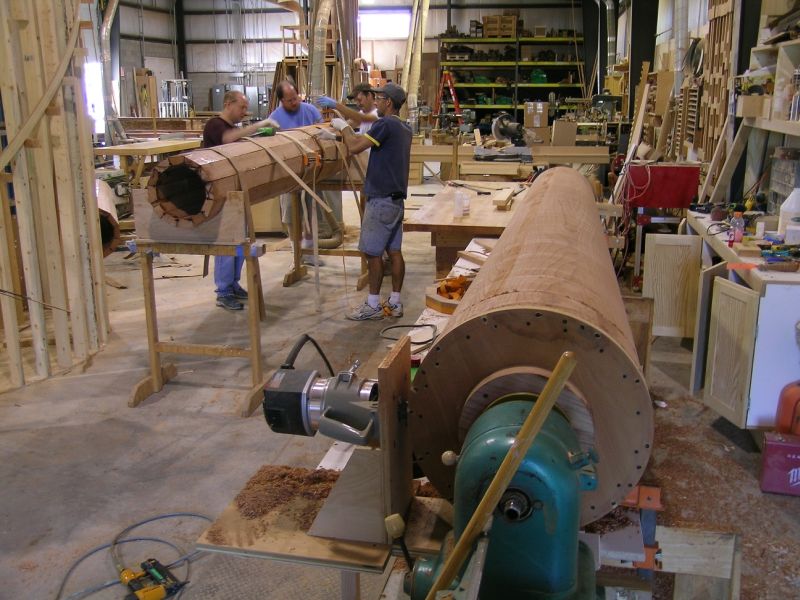
Setting Up for Finger Jointing and End Gluing
Practical advice on tooling up to make long boards out of shorter lengths using a finger-jointed glued end joint.May 15, 2012
Question
Is there a machine or a process to end glue 4' to 8' boards to make 16' boards? I know there are plenty of finger jointers out there, but is there a small, cheaper, more labor intensive way to do a smaller amount? And does it have to be finger jointed? Specifically, I want to have 16' alder for mouldings, without purchasing a high priced, high end, high production finger jointing machine.
Forum Responses
(Solid Wood Machining Forum)
From contributor R:
There are shaper cutters and even router bits that will cut finger joints. You'll need to have space and support tables to keep the 8' boards fairly level, but that's not typically a big issue. If all else fails, a scarf joint is the traditional way to join shorter stock into longer.
From the original questioner:
Yes, I knew about the cutter heads for joining, but I would think you would need to have some way to press/clamp the boards together. Or am I making it too complicated?
From contributor R:
Making it complicated. If you set the height carefully, you can run the boards independently and just flip one over to align the fingers. Or just run all of one side of the joint, reset the height to align properly, and run all the others.
From contributor B:
I use a Garniga finger joint cutter. If you want a clamp that works fast, Rangate sells the archpress. It would work fine for straight stock, but it sure ain't cheap. I have a manual German clamp for this purpose. I bought it used and have no idea who made it originally or if they are still available. The manual version is basically two clamps connected with a rod that can be pulled together. It works okay, but you have to watch to make sure you end up with a straight board. I believe many people just press fit the parts.
From contributor M:
Another option is to find a company that has a finger jointer and pay them to run your stock.
From contributor J:
I use a Garniga finger joint cutter too. It works very well. I also bought a used clamp that works like a car jack. You clamp each side to one of the boards then use a lever to jack them together. A bit tricky at first but it works well. Greg at Rangate also sells a manual clamp for those that don't need the archpress. These setups can be used to join together parts to make arched euro windows. I used them recently to end join teak for a vanity.
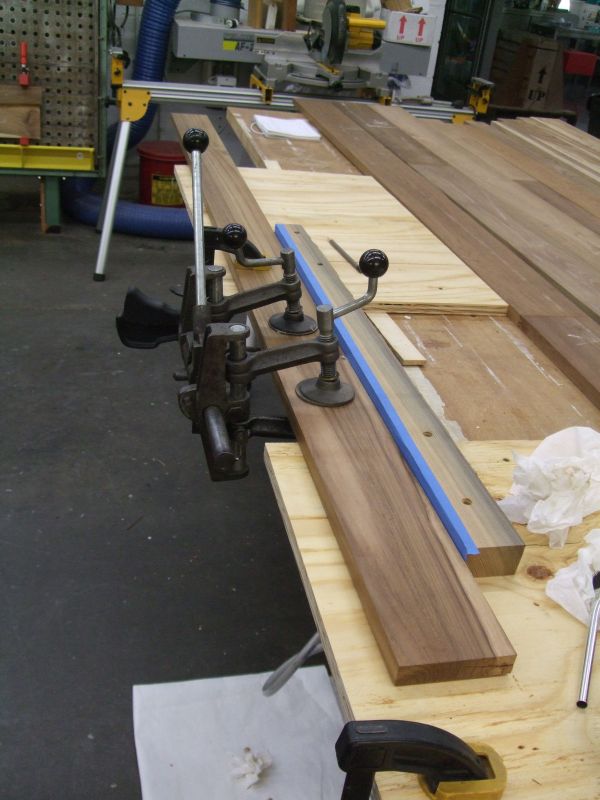
Click here for higher quality, full size image
From contributor I:
I've done this by just using a simple lap joint and clamping with some of those Kreg type face frame clamps. I'm sure you could use a radial arm saw with some type of moulding head to make a locking type joint.
From contributor U:
I cut a scarf joint on my Altendorf and clamp with spring clamps using yellow glue if there is time. If not I use super glue and activator. Joint is more visible with super glue but it is faster.
From Professor Gene Wengert, forum technical advisor:
Finger joints are indeed easy to make but it is best if the finger has a small gap at the end to hold a bit of excess glue. Avoid sharp points for highest strength. Hot melt adhesives are a good choice in your case. A visit to see these joints being made will be very helpful.